DNO diversions
Service alterations ahead of construction — where an existing HV or LV cable is being cut, re-routed or abandoned.
Cable spiking is the non-negotiable step that keeps people alive when working on or near previously-energised cables. Our authorised spikers carry out the operation safely and quickly.
Spiking is a controlled action that confirms a cable has been correctly isolated before it is cut or altered. A spiking gun fires an insulated pin through the cable, tripping protection if the cable is still live.
If the cable is truly dead, nothing happens. If it isn't, the fault is caught by the protection — not by a fitter's hacksaw. It's the most important five minutes on any cable alteration job.
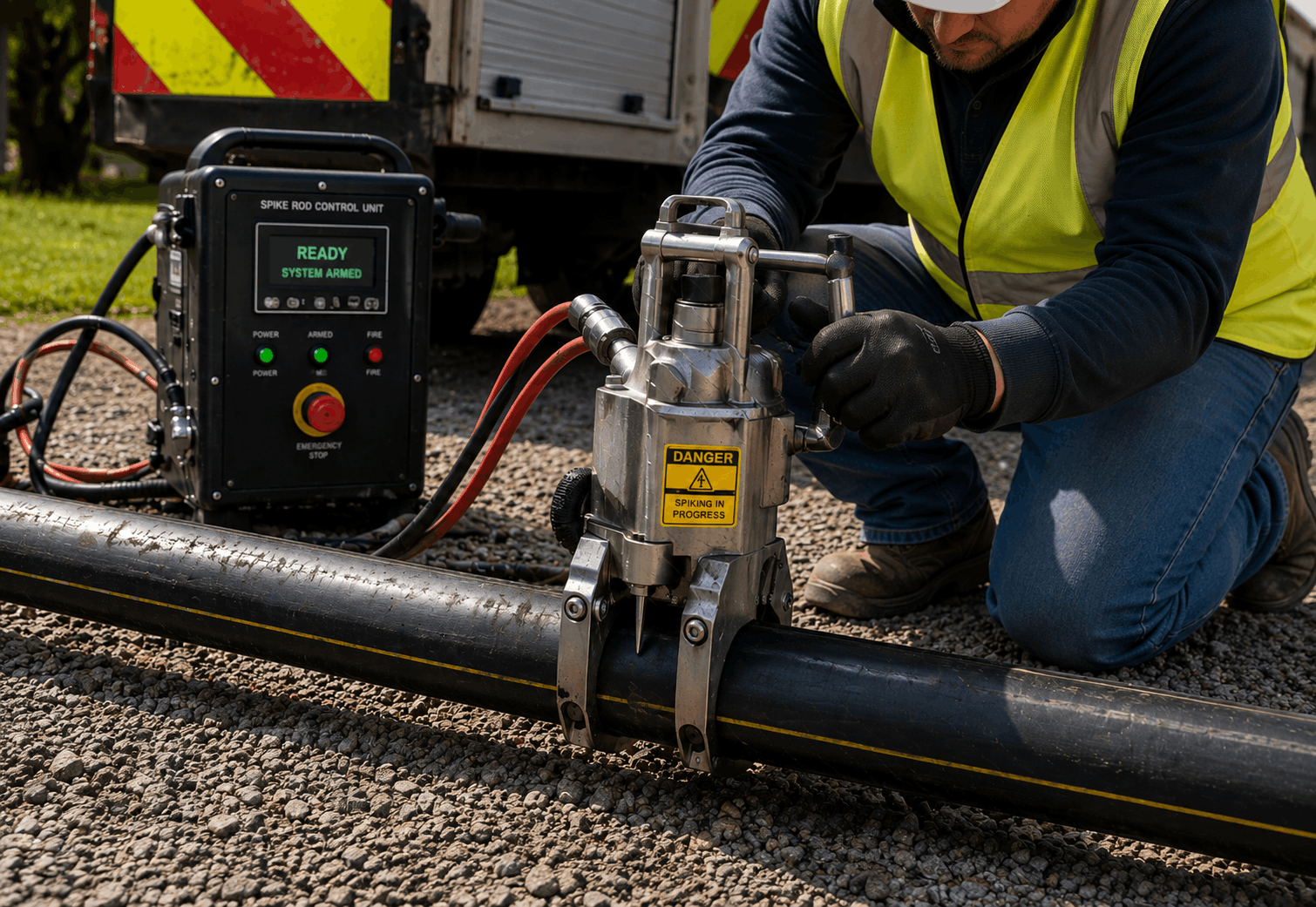
Short and precise. This is a job where the boring, methodical version is the safe version.
Cross-reference drawings, route tracing and DNO records. Positive identification before anything else.
Work with the DNO / network operator to get a sanction for test and isolation in place.
Establish an exclusion zone, position remote spike gun, clear personnel, brief and countdown.
Fire the spike from safe distance, confirm no trip, document the outcome, hand back for cut & repair.
Service alterations ahead of construction — where an existing HV or LV cable is being cut, re-routed or abandoned.
End-of-life substations and switchgear rooms where old cables need safe disconnection before removal.
Third-party strikes, ploughed-through services and storm damage — proving cables dead before repair crews close in.
Tee-joints and live cable alterations for new DNO or ICP connections.
We can be on site with the right kit and paperwork, usually within 48 hours.